
Table of Contents
- Why Mediators Need Comprehensive Safety Procedures
- Understanding the Risks Mediators Face in Sessions
- Physical Safety Standards for In-Person Mediation
- Environmental Setup and Session Space Management
- Digital Security for Virtual Mediation Sessions
- De-escalation Techniques and Conflict Prevention
- Managing Difficult Participants and Emotional Situations
- Documentation and Record-Keeping Protocols
- Emergency Response Planning and Crisis Management
- How Our Certification Program Covers Safety Training
- Building Client Confidence Through Professional Procedures
- Frequently Asked Questions (FAQ)
Why Mediators Need Comprehensive Safety Procedures
Safety isn’t peripheral to mediation work—it’s foundational. When you’re facilitating conversations between conflicted parties, you’re managing emotions, power dynamics, and sometimes escalating tensions. A mediator who lacks robust safety protocols risks personal harm, legal exposure, and damaged professional credibility.
The stakes are real. Mediators operate in spaces where frustration runs high and participants may have unpredictable reactions. Whether you’re conducting a divorce mediation, workplace dispute resolution, or business negotiation, establishing clear safety procedures protects you, your clients, and the integrity of the process itself.
We’ve built safety training into our certification curriculum because we recognize that mediator safety directly impacts client outcomes. When you demonstrate professional operational procedures, participants feel more secure trusting the process. This foundation of safety actually strengthens your ability to help people resolve disputes effectively.
Understanding the Risks Mediators Face in Sessions
Mediators encounter distinct hazard categories that require specific preparation. Physical threats, though less common than many imagine, do occur and range from verbal aggression to intimidation or violence. Psychological risks include emotional manipulation, aggressive behavior patterns, and exposure to traumatic narratives without adequate boundaries.
Environmental hazards matter too. An unsafe or unsecured facility, inadequate emergency access, or poor visibility into your mediation space creates vulnerability. Financial exposure emerges when you lack proper documentation or fail to follow procedural safeguards that could later protect you in disputes about what was agreed.
Some mediators face specific risk profiles based on the mediation type. Family mediation may involve domestic violence history or custody disputes with heightened emotional stakes. Business mediation might include parties with significant financial losses or power imbalances. Workplace mediation can surface harassment allegations or retaliation concerns. Understanding your particular risk profile allows you to implement targeted protective measures.
Physical Safety Standards for In-Person Mediation
Your physical setup should communicate professionalism while providing practical safety margins. Position your desk or mediation table so you have clear sightlines to all participants and an unobstructed path to the door. Never position yourself in a corner or between an upset participant and an exit route.
When meeting with high-risk parties—situations involving documented aggression, substance abuse history, or severe emotional volatility—consider these precautions:
- Hold sessions during business hours when building staff or security is present
- Inform a colleague of your session location and expected duration
- Schedule a brief check-in call after the session concludes
- Arrange for an empty adjacent room or receptionist within sight or earshot
- Position a panic button or communication device within discreet reach
Your physical environment should be professional but neutral. Avoid displaying personal items, photos of family members, or details that reveal your home address or off-work activities. This reduces opportunities for boundary violations or targeted intimidation.
Environmental Setup and Session Space Management
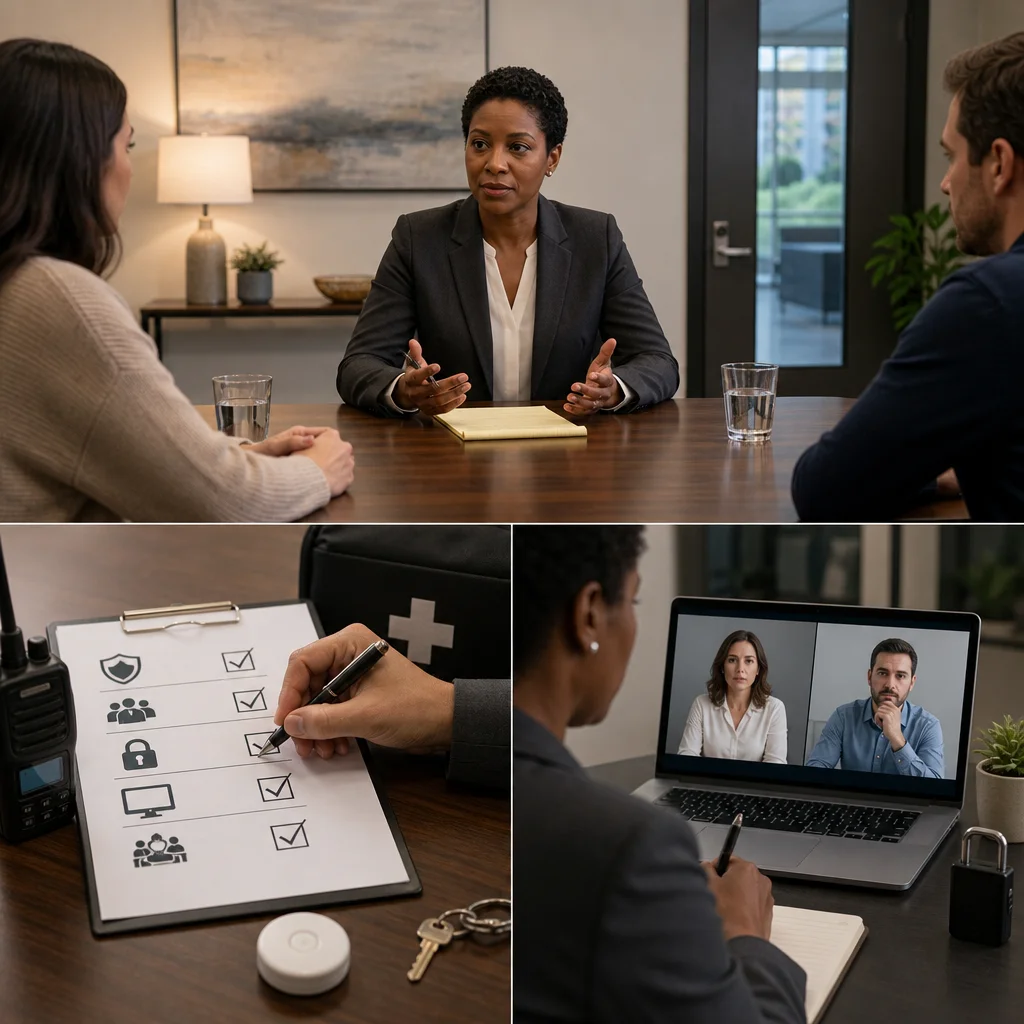
The physical mediation space itself communicates messages about safety and control. Choose a neutral location when possible, avoiding a mediator’s home office or one party’s workplace (which creates appearance of bias and power imbalance). Professional mediation centers, conference rooms in neutral buildings, or dedicated office spaces work best.
Arrange seating thoughtfully. A round table or modified U-shape allows all parties to sit at roughly equal heights and distances from you, reducing power positioning advantages. Ensure adequate distance between conflicted parties to prevent escalation or physical confrontation—typically at least 4-6 feet depending on the situation’s volatility level.
Lighting, temperature, and noise control matter more than many mediators realize. Poor lighting creates anxiety; excessive heat increases irritability; loud external noise triggers stress responses. Control what you can to maintain a calm, focused environment.
Private waiting areas prevent pre-session collusion or escalation while parties wait. If your space doesn’t allow this, schedule separate arrival times or conduct pre-mediation calls to prevent parties from intersecting in hallways or reception areas.
Digital Security for Virtual Mediation Sessions
Virtual mediation introduced new safety considerations we must address proactively. Use secure, dedicated platforms designed for confidential interactions—not generic video tools with public hosting. Platforms should offer password protection, waiting rooms, and the ability to remove participants if needed.
Establish clear digital protocols with participants before sessions begin:
- Send login credentials only through secure channels, never embedded in calendar invitations
- Require participants to join from private locations where others can’t hear confidential information
- Prohibit recording without written consent and explicit explanation of how recordings will be stored
- Verify participant identity before admitting them from the waiting room
- Establish that participants should use professional backdrops or appropriate home settings
Your own digital environment requires equal attention. Mediate from a secure location where you won’t be interrupted or overheard. Use a professional background or virtual backdrop that doesn’t reveal personal details. Confirm your internet connection is stable and encrypted, and never mediate over public WiFi.
Create a protocol for technology failures. If the connection drops, establish a predetermined callback procedure rather than leaving uncertain participants hanging. Document the interruption in your session notes.
De-escalation Techniques and Conflict Prevention
De-escalation is preventive safety work. Early intervention stops conflicts before they reach dangerous intensity levels. Watch for warning signs: raising voices, interrupting aggressively, rigid body posture, flushed coloring, or personal insults replacing issue-focused discussion.
When you notice early escalation, pause the session gently. Use a calm, steady voice and neutral language: “I notice the conversation is getting heated. Let’s take a brief pause so everyone can reset.” This simple intervention prevents momentum from building toward aggression.
Establish ground rules before substantive mediation begins. Ask participants to commit to speaking one at a time, using respectful language, and focusing on issues rather than character attacks. Make clear that violations of these agreements mean you’ll pause the session and may reschedule.
Breathing work helps participants regulate their nervous system. Suggest: “Let’s all take three slow, deep breaths before continuing.” This biological reset reduces adrenaline and restores access to rational thinking.
Physical proximity management reinforces boundaries. If someone stands to approach another participant aggressively, stand yourself and calmly state: “Let’s stay seated so we can continue productively.” Your presence and clear expectations often prevent escalation.
Managing Difficult Participants and Emotional Situations

Some participants arrive already dysregulated—grieving, angry, or feeling victimized. Your role includes creating container for intense emotion without allowing it to derail process or threaten safety.
Acknowledge emotions directly: “I see this is deeply painful. Your feelings are valid.” Then redirect toward productive engagement: “Let’s talk about what you need to move forward on this issue.” This validates without enabling uncontrolled emotional expression.
Individuals with personality patterns that include aggression, manipulation, or entitlement sometimes test boundaries deliberately. Remain professional and consistent. Don’t match escalation with your own frustration. If someone becomes abusive toward you personally, pause clearly: “I want to help resolve this dispute. I can only continue if we maintain respectful communication. Let’s pause for 15 minutes.”
Have an exit protocol ready. You maintain the right to terminate a session if a participant becomes physically threatening, refuses to follow ground rules after warnings, or engages in behavior that makes safe facilitation impossible. Document your reasons clearly and offer a path forward: “We can reschedule when everyone is prepared to participate respectfully.”
Documentation and Record-Keeping Protocols
Detailed records protect you legally and serve as objective reference if disputes arise about what was agreed. After each session, document:
- Date, time, location, and participants present
- Topics discussed and areas of progress
- Any agreements reached, even partial ones
- Ground rule violations or behavioral concerns
- Any safety incidents, threats, or unusual circumstances
- Participant demeanor or concerning comments
- Your recommendations for next steps
Store records securely in locked cabinets (for physical files) or encrypted digital storage. Establish clear confidentiality protocols and share information only with participants’ written consent or when legally required.
Maintain separate notes on your safety observations that aren’t shared with participants. These personal case notes document warning signs, behavioral patterns, or concerns that inform your risk management but aren’t part of the official mediation file.
Emergency Response Planning and Crisis Management
Before you conduct your first mediation session, establish a crisis protocol. Write it down and practice it mentally so you can execute under stress.
Your plan should address:
- How you’ll summon help (identify a trusted colleague or building security contact)
- Where you’ll move if you need to exit the mediation space
- How you’ll document the incident immediately after
- Whether you’ll file a police report and how you’ll coordinate that
- How you’ll notify insurance carriers if applicable
- Whether you need medical attention
Brief your office staff or colleagues on this protocol. If you mediate solo from a private office, establish a relationship with building management or security so they understand your work environment and know to respond if you need assistance.
Create a list of participants or situations that warrant additional safety measures from the start. Perhaps certain court-involved cases, those with documented violence history, or specific individual backgrounds require modified procedures.
How Our Certification Program Covers Safety Training
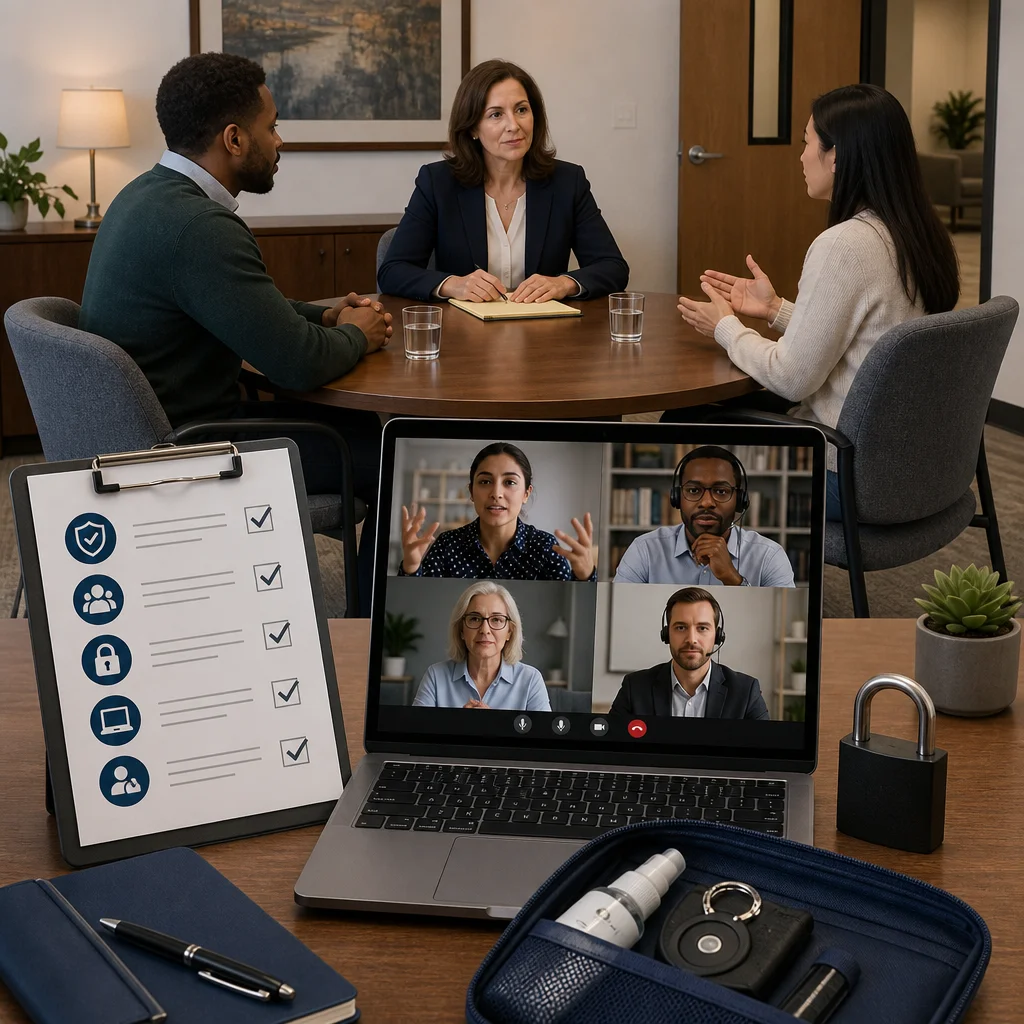
We’ve integrated comprehensive safety protocols throughout our mediation certification curriculum because we believe mediators deserve training that prepares them for real-world complexity. Our 40-hour mediation training includes dedicated modules on safety procedures, risk assessment, and de-escalation techniques alongside core mediation skills.
Our instructors bring years of direct mediation experience and share real scenarios they’ve encountered. You’ll work through role-play simulations where you practice recognizing warning signs early and responding to escalating conflict before it reaches crisis levels. This hands-on preparation builds your confidence and competence.
We also cover mediator liability insurance essentials and documentation standards that protect your practice legally. Our program emphasizes that safety procedures aren’t bureaucratic overhead—they’re professional tools that strengthen your effectiveness and credibility.
Building Client Confidence Through Professional Procedures
When potential clients evaluate mediators, they assess your professionalism partly through your operational practices. Clients notice whether you have a clear intake process, whether you explain your procedures before starting, and whether your physical space feels secure and organized.
Share your safety commitments openly. In your initial consultation, briefly explain your ground rules and your approach to managing difficult moments. This transparency builds confidence: clients understand you’ve thought through potential challenges and have strategies for handling them.
Your documentation practices also communicate professionalism. When you send follow-up notes confirming what was discussed and agreed, participants recognize that you maintain rigorous records. This actually reduces later disputes because everyone has reference to what was said.
Clients are also more willing to engage authentically when they trust their information is protected and that you maintain clear confidentiality boundaries. Make these commitments explicit in your intake materials and verbal explanations.
Building a successful mediation practice means establishing yourself as someone who maintains high professional standards in every dimension, including safety. When mediators demonstrate that they take safety seriously, participants relax enough to do the real work of conflict resolution. That’s when mediation creates genuine value.
As you develop your mediation practice, remember that comprehensive safety procedures are foundational to sustainable, profitable work. If you’re building toward professional mediator certification, prioritize training programs that teach you not just mediation skills but operational excellence, including safety protocols.
Frequently Asked Questions (FAQ)
What safety training does our certification program include?
We cover comprehensive safety protocols throughout our 40-hour mediation certification course, including physical safety standards for in-person sessions, digital security for virtual mediation, de-escalation techniques, and emergency response planning. Our curriculum includes 12 hours of role-play simulation with real instructors, which allows you to practice handling difficult participants and emotional situations in a controlled environment before working with actual clients.
How do we prepare mediators to manage virtual session security?
We teach our students specific digital security measures for virtual mediation, including platform selection guidelines, participant verification protocols, and documentation safeguards. Our training addresses the unique risks of online sessions and provides practical procedures you can implement immediately in your practice.
Why is comprehensive safety training essential for building a sustainable mediation practice?
We emphasize safety because understanding risk management, emergency protocols, and conflict prevention directly protects your clients, your reputation, and your business. When you graduate from our program, you’ll have the operational knowledge to create a secure professional environment, which builds client confidence and allows you to establish a sustainable, profitable practice with fewer complications.